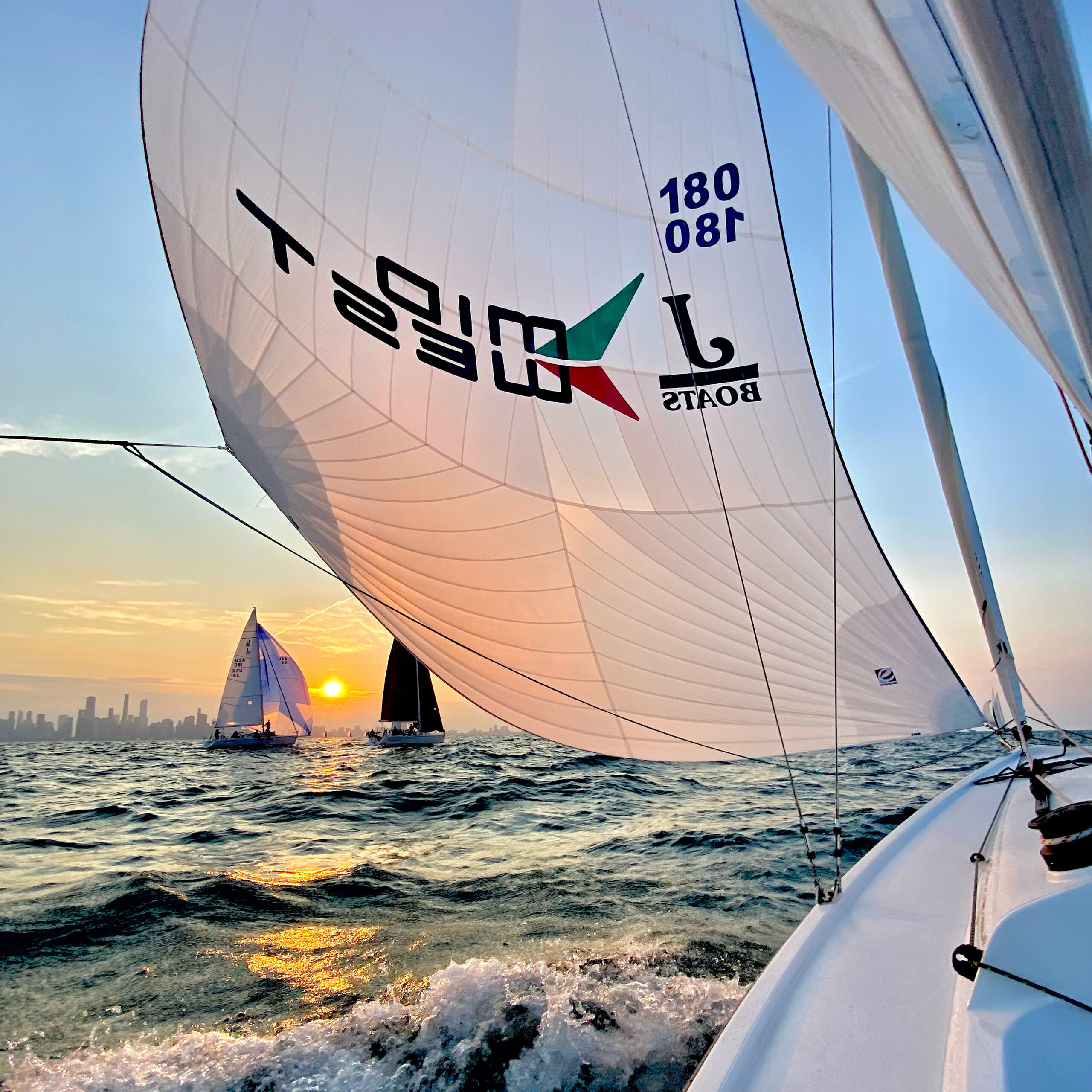
Every once in a while, a new boat comes along that lets you rethink the entire sail plan from the ground up. The J/7 is one of those rare opportunities. When J/Boats Midwest and 180 Sails took delivery of hull #2 this summer, we weren’t just unwrapping a new model. We were stepping into the creation of a brand new class, with no playbook, no decades of tuning guides, and no existing sail shapes to reference. Everything from mast bend numbers to downwind angles had only ever existed on paper. The moment the boat touched water in Chicago, the real work began.
J/Boats provided the baseline sail plan, which gave us confidence that the major dimensions were correct. But while the numbers were right, the personalities of new boats rarely emerge until they are sailed. The J/7’s season in Chicago is short, and with the boat and sails needing to be completed simultaneously, we had to rely on experience, educated assumptions, and a bit of instinct to create the first generation of sails. With similarities to the J/70 but key differences in hull shape, displacement, and keel design, the J/7 clearly required its own approach.
For the first generation of sails, we estimated our target rig positions and how the boat would want to be sailed. Moving the jib cars to the cabin top eliminated the need for weather sheeting. The J/7’s added weight and increased stability meant we needed more power to achieve proper heel and to design sails around a slightly wider sheeting angle. We pulled attachment details such as slides, corner hardware, and zipper luff construction from the class plan and from our experience building sails for the J/70.
The spinnaker package was its own challenge. J/Boats specified a surprisingly large sail for the size of the boat, similar to the J/70’s but on a shorter bowsprit. That excess projected area naturally led to a deep, powerful A2, designed to rotate nicely and perform well downwind. Since the J/7 does not plane like the J/70 or J/111, we leaned toward a deeper VMG sail and started from a refined version of the oversized J/109 A2s that have proven so fast in the Great Lakes fleet. A smaller, flatter A3 completed the package for big breeze racing and cruising.
For materials, we selected Contender Warptech, a triradial Dacron similar to the cloths used in other J classes but with a slightly softer finish. Performance was important, but so was practicality. The jib will live on a furler and the main on the boom with slides, and these boats are meant to be simple and fun to take sailing. Ultra stiff racing cloths that require rolling after each use didn’t fit the mission of the boat. Warptech gave us performance, durability, and easy handling.
Once the sails were built, the real world testing began. We assembled the boat for the first time and immediately discovered the mast was slightly softer than expected. Some of our projected bend numbers were off, and it took experimenting to find the sweet spot. The boat ended up sailing best with a relatively upright mast, which reduced prebend and added headstay tension. As tuning progressed, another pleasant surprise emerged: the boat was noticeably faster and stiffer than predicted. Sailing it became not only easier, but genuinely fun.
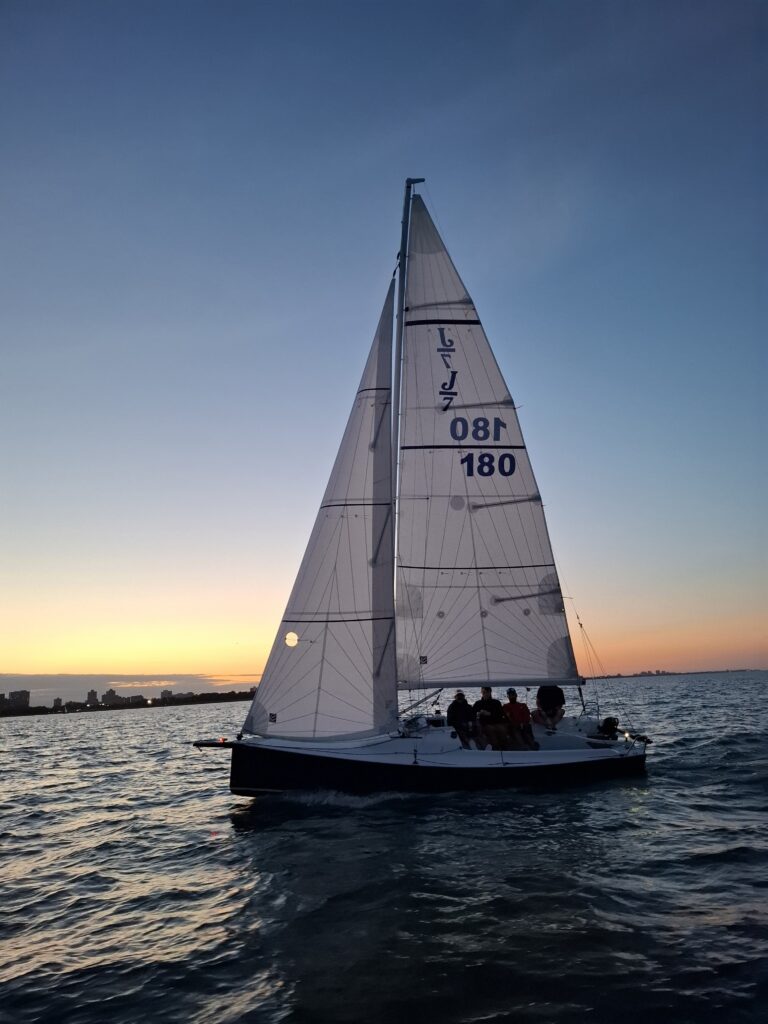
After a couple months of sailing and tuning, we moved into Version 2. The jib shape was solid from day one, but we refined the batten angles and UV cover to improve furling behavior. We had initially left the clew high in case the rig required more rake, and once tuning stabilized, we lowered the clew for the ideal cabin-top sheeting angle.
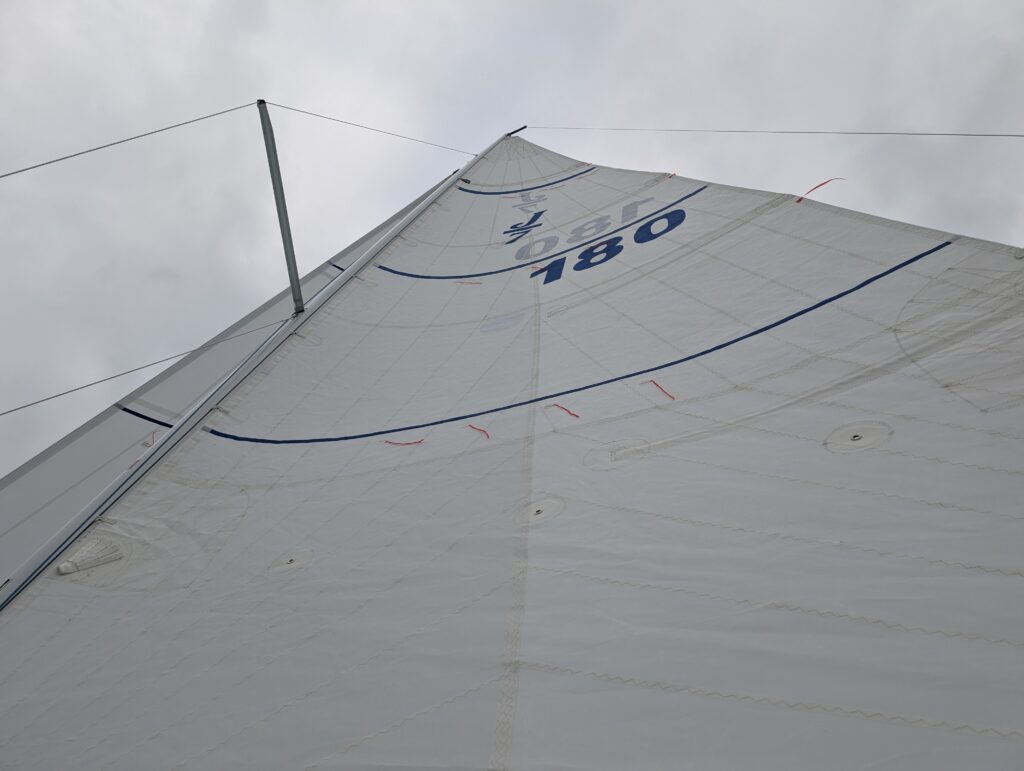
The mainsail required a bit more change. To accommodate the softer mast and the boat’s greater stiffness, we added luff curve and depth through the broad seams. This improved light air performance and kept the sail stable as the breeze increased. We also worked with J/Boats to slightly widen the upper girths. The original plan was too conservative on leech width, causing the top batten to hook and stall. A small tweak to the class rules allowed an extra two inches of roach, which gave the sail the twist profile it needed without interfering with the backstay.
The spinnakers required only minor adjustment. The A2 rotated beautifully from the first day, but when we raked the mast forward, the effective hoist shortened and the luff became slightly long. Shortening the luff on both the A2 and A3 restored stability and improved reaching performance.
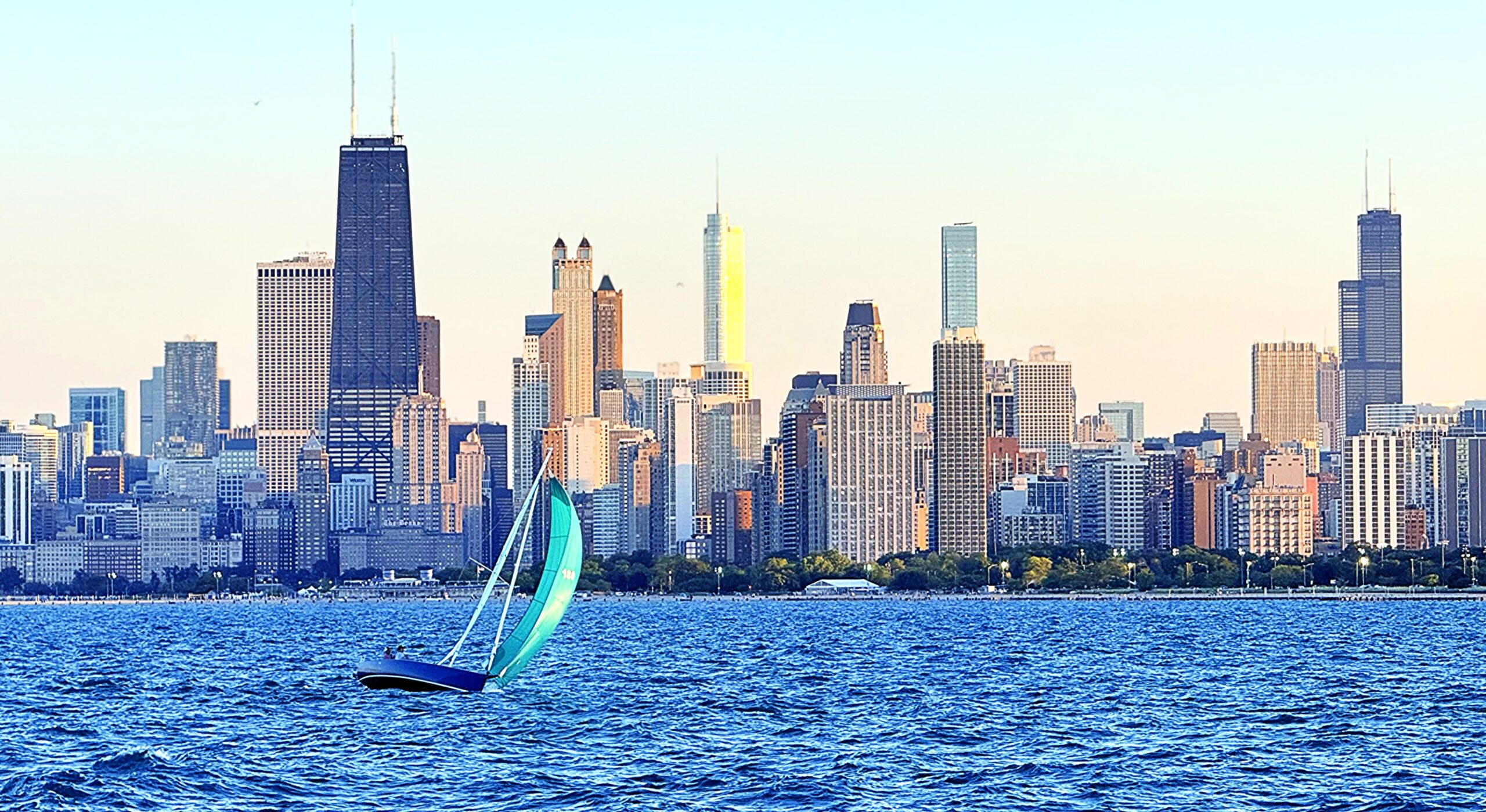
Designing sails for a brand new class is one of the most rewarding challenges in sailmaking. You learn the boat in real time, make your best judgments, test them on the water, and refine the product as the boat begins to reveal its true character. The J/7 is a joy to sail, and each iteration of the sails has made it faster, easier to tune, and more balanced across the range. With more J/7s scheduled to arrive next season, we are excited to move into two boat testing and continue refining a sails program that will help shape this class for years to come.
Summary
The J/7 provided a rare opportunity to design a sail package from a clean slate. Version 1 was based on educated assumptions, experience with similar J/Boats, and the initial class plan. On the water testing revealed a softer mast, a stiffer hull, and a more powerful boat than anticipated, leading to measured refinements for Version 2 in the main, jib, and spinnakers. The class will continue to evolve as more boats hit the water, and early testing shows the J/7 to be a well balanced, fun, and fast platform with tremendous room for development.
Call to Action
If you are interested in sails for your J/7 or want help optimizing your current sail plan, we would love to work with you.
For more information
See Our J Boats Midwest Dealership
J Boats Midwest
Learn More About Evolution Sails Chicago
Evolution Sails Chicago
Explore Our Learning Center
Learning Center